
Self-confidence is one of the most powerful qualities a person can develop. It influences how we think, act, communicate, and approach challenges in life. People with strong self-confidence are more likely to take opportunities, express their ideas clearly, and pursue their goals with determination.
However, confidence is not something people are simply born with. It is a skill that can be developed through habits, mindset changes, and consistent practice. By understanding how confidence works and applying the right strategies, anyone can gradually build stronger self-belief.
If you want a deeper understanding of personal growth and mindset development, you can also explore the complete Personality Development Guide for Students and Young Professionals on this website.
What Is Self Confidence?
Self-confidence is the belief in your abilities, skills, and judgment. It reflects how much trust you place in yourself when facing situations, making decisions, or interacting with others.
Confidence does not mean believing that you are perfect. Instead, it means recognizing your strengths while accepting that mistakes are part of growth.
People with healthy self-confidence typically:
- Believe in their ability to learn and improve
- Express their ideas without excessive fear
- Approach challenges with a positive mindset
- Recover from failures more quickly
Building confidence is a gradual process that strengthens through experience and self-awareness.
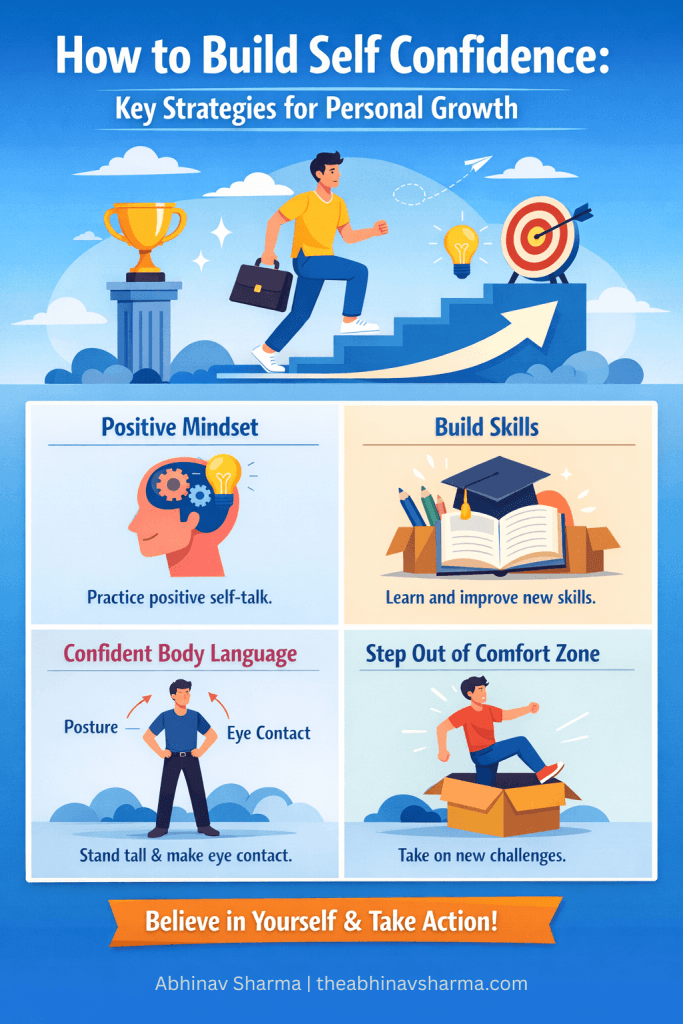
Why Self Confidence Is Important
Self-confidence affects many areas of life, including personal relationships, career development, and emotional well-being.
Better Communication
Confident individuals are more comfortable expressing their thoughts and opinions. This leads to clearer communication and stronger relationships with others.
Improved Decision Making
When you trust your judgment, you can make decisions more effectively without constant doubt.
Greater Resilience
Confidence helps individuals recover from setbacks. Instead of giving up after failure, confident people view challenges as learning opportunities.
Increased Opportunities
People who believe in themselves are more willing to pursue new opportunities, such as leadership roles, career advancements, or personal projects.
Signs of Low Self Confidence
Before improving confidence, it is helpful to recognize the common signs of low self-belief.
These may include:
- Constant self-doubt
- Fear of speaking in groups
- Comparing yourself negatively with others
- Avoiding new challenges
- Overthinking small mistakes
Recognizing these patterns is the first step toward building stronger confidence.
Practical Strategies to Build Self Confidence
Developing confidence requires consistent effort. The following strategies can help you gradually strengthen your self-belief.
1. Improve Self Awareness
Self-awareness helps you understand both your strengths and areas for improvement.
Start by reflecting on questions such as:
- What skills do I already have?
- What achievements am I proud of?
- What areas can I improve?
Writing these reflections in a journal can help you develop a clearer understanding of your abilities.
2. Set Small Achievable Goals
Confidence grows when you achieve goals, even small ones.
Instead of setting extremely difficult goals immediately, begin with manageable tasks. For example:
- Completing a new skill course
- Speaking in a small group discussion
- Practicing a new habit consistently
Each achievement strengthens your belief in your abilities.
3. Improve Your Body Language
Body language plays a significant role in how confident you appear and feel.
Simple adjustments can make a noticeable difference:
- Maintain good posture
- Make eye contact during conversations
- Speak clearly and calmly
- Avoid nervous gestures
These physical behaviors can gradually influence your internal sense of confidence.
4. Develop Positive Self Talk
The way you speak to yourself matters.
Many people with low confidence have a habit of negative self-talk, such as thinking:
“I am not good enough.”
Instead, practice more constructive thoughts:
“I am learning and improving.”
Positive self-talk helps reshape your mindset over time.
5. Build Knowledge and Skills
Confidence often increases when you improve your abilities.
Learning new skills, reading books, and gaining knowledge about your field can make you feel more prepared and capable.
The more competent you become, the more naturally your confidence grows.
6. Step Outside Your Comfort Zone
Growth rarely happens within comfort zones.
Trying new experiences, even if they feel slightly uncomfortable, helps expand your abilities.
Examples include:
- Public speaking
- Participating in discussions
- Taking leadership roles in projects
Each new experience builds resilience and strengthens confidence.
7. Stop Comparing Yourself With Others
Constant comparison can damage self-confidence.
Everyone’s journey is different. Instead of comparing yourself with others, focus on improving your own skills and habits.
Personal growth becomes easier when you measure progress against your past self rather than other people.
Habits That Strengthen Self Confidence
Certain daily habits can gradually improve your confidence.
Examples include:
- Regular exercise
- Reading and learning new ideas
- Practicing gratitude
- Maintaining a structured routine
- Reflecting on daily progress
These habits help create a stable mindset that supports long-term personal growth.
Common Mistakes That Reduce Confidence
While building confidence, it is also important to avoid habits that weaken it.
Some common mistakes include:
- Expecting perfection in everything
- Avoiding challenges due to fear of failure
- Focusing only on weaknesses
- Seeking constant approval from others
Understanding these patterns can help you replace them with healthier behaviors.
Confidence Is Built Through Consistency
Confidence does not appear suddenly. It develops gradually through repeated effort and experience.
Small improvements in habits, mindset, and communication can lead to significant changes over time. The key is to remain consistent and patient while working on personal growth.
By practicing the strategies discussed above, anyone can build stronger self-confidence and develop a more positive outlook toward challenges and opportunities.
Final Thoughts
Self-confidence is one of the most valuable skills you can develop in life. It influences how you communicate, pursue opportunities, and respond to challenges.
By improving self-awareness, setting achievable goals, practicing positive habits, and stepping outside your comfort zone, you can gradually build stronger self-belief.
Remember that confidence is not about being perfect. It is about trusting your ability to learn, adapt, and grow.
With consistent effort, self-confidence can become one of the strongest foundations for personal success and fulfillment.
Read Related Blogs
If you want to continue your personal growth journey, explore these helpful articles:
- Personality Development Guide for Students and Young Professionals – A complete roadmap for improving confidence, communication skills, habits, and mindset.
- Top 15 Personality Development Tips to Boost Your Confidence and Growth – Practical tips to strengthen your personality and develop positive habits.
- Unlock Your Best Self: The 10 Essential Qualities of Personality Development – Learn the key qualities that shape a strong and confident personality.
- My Personal Growth Journey – A personal story about self-improvement and lessons learned along the way.
FAQ
Yes, self confidence can be developed through practice, self awareness, skill development, and positive habits.
Low confidence often comes from negative experiences, constant comparison with others, fear of failure, and lack of self belief.
Confidence develops gradually. With consistent practice and positive habits, noticeable improvements can appear within a few months.

Abhinav Sharma is a writer focused on personality development, mindset growth, and helping students build confidence and life skills.