
Introduction
Improving personal growth is an essential journey that enables individuals to maximize their potential, achieve goals, and lead a fulfilling life. Personal growth isn’t just about acquiring new skills but also about enhancing your mindset, confidence, and overall outlook. In this article, we delve into effective strategies to improve personal growth, along with actionable personality development tips by Abhinav Sharma to guide you on this transformative path.
Daily habits are one of the most powerful factors in shaping personality and mindset. To understand how habits connect with confidence, communication, and personal growth, read the Ultimate Personality Development Guide for Students and Young Professionals.
What is Personal Growth?
Personal growth refers to the continuous process of self-improvement in knowledge, skills, attitude, and habits. It is a lifelong journey that involves setting goals, overcoming challenges, and developing a strong sense of self-awareness. Whether you’re seeking professional success or personal fulfillment, the key lies in committing to self-growth.
Importance of Personal Growth
- Enhances Self-Awareness: Personal growth fosters a deeper understanding of your strengths and weaknesses.
- Improves Relationships: As you grow, you cultivate better communication and emotional intelligence.
- Boosts Confidence: Achieving milestones in personal growth enhances self-esteem.
- Promotes Resilience: It prepares you to face challenges with a positive mindset.
Effective Tips to Improve Personal Growth
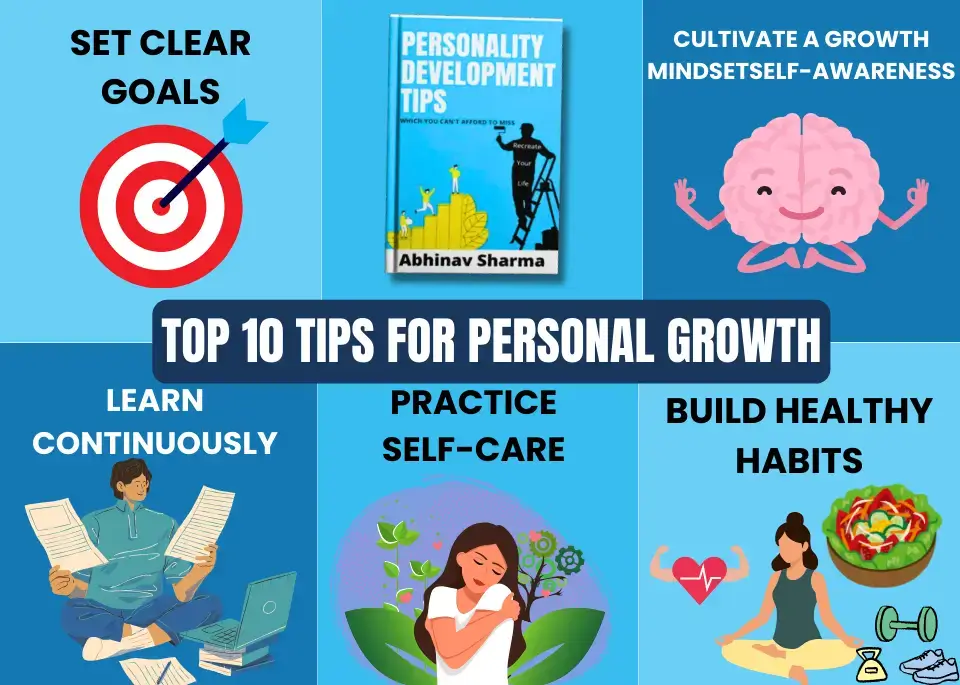
1. Set Clear Goals
Why it matters: Goals give direction and purpose. How to do it:
- Use the SMART framework (Specific, Measurable, Achievable, Relevant, Time-bound).
- Break larger goals into smaller, actionable steps.
2. Cultivate a Growth Mindset
Why it matters: A growth mindset encourages learning and resilience. How to do it:
- Embrace challenges as opportunities.
- Replace self-doubt with positive affirmations.
- Read books like Mindset by Carol Dweck for inspiration.
3. Learn Continuously
Why it matters: Knowledge expands your horizons and boosts confidence. How to do it:
- Enroll in online courses.
- Attend seminars or workshops.
- Follow blogs and YouTube channels like Abhinav Sharma’s Sansarmarg.
4. Practice Self-Care
Why it matters: Mental and physical health are vital for personal growth. How to do it:
- Exercise regularly.
- Meditate for mental clarity.
- Maintain a balanced diet and proper sleep schedule.
5. Enhance Emotional Intelligence
Why it matters: Strong EQ improves interpersonal relationships. How to do it:
- Practice active listening.
- Recognize and manage your emotions.
- Develop empathy for others.
6. Build Healthy Habits
Why it matters: Habits shape your daily life and long-term success. How to do it:
- Start small, like journaling daily or reading 15 minutes a day.
- Use habit-tracking apps for consistency.
7. Step Out of Your Comfort Zone
Why it matters: Growth happens when you challenge yourself. How to do it:
- Try new experiences, like public speaking or learning a new skill.
- Face fears gradually to build confidence.
8. Seek Feedback and Reflect
Why it matters: Feedback provides valuable insights. How to do it:
- Ask mentors or colleagues for constructive criticism.
- Reflect on daily actions and decisions in a journal.
9. Surround Yourself with Positivity
Why it matters: Your environment influences your mindset. How to do it:
- Build relationships with supportive and inspiring people.
- Limit exposure to negativity, both online and offline.
10. Stay Consistent and Patient
Why it matters: Sustainable growth requires dedication over time. How to do it: Set small daily goals, practice positive habits consistently, and track your progress regularly. Focus on steady improvement rather than quick results, and remain patient as your efforts gradually shape your personality over time.
Building these habits consistently can transform your life. If you want a complete framework for personal growth, explore the Personality Development Guide for Students and Young Professionals.
Conclusion
Improving personal growth is a journey that requires dedication, self-awareness, and actionable steps. By integrating these personality development tips shared by Abhinav Sharma, you can unlock your true potential and lead a more fulfilling life. Remember, growth is not a destination but a continuous process. Start today and embrace the change
Read More
- Top 15 Personality Development Tips To Boost Your Confidence And Growth
- The Power of Positive Thinking: How to Rewire Your Mindset
FAQ
According to Abhinav Sharma, the best daily habits include self-reflection (journaling), active listening, reading widely, and practicing mindfulness. Incorporating a structured morning routine that focuses on gratitude and learning something new every day can significantly transform your mindset and long-term productivity.
The first step to personal growth is self-awareness. Start by identifying your core strengths, weaknesses, and values. As Abhinav Sharma suggests, you can kickstart this by journaling about your current state and setting one or two specific goals, such as becoming more patient or improving your communication skills.
While deep transformation is a lifelong process, you can see significant changes in 7 days by focusing on “quick wins.” This includes practicing better body language, offering genuine compliments, seeking feedback from mentors, and stepping out of your comfort zone with small, daily challenges.
Positive thinking rewires your brain through neuroplasticity, allowing you to focus on solutions rather than obstacles. It reduces stress, boosts resilience, and improves both physical and mental well-being. Focusing on gratitude and reframing negative thoughts are key strategies for a growth-oriented mindset.
To reconnect with your authentic self, reflect on past hobbies and qualities that once defined you. Abhinav Sharma recommends spending time with people who knew your “core self,” prioritizing self-care, and using journaling to process current emotions and remove factors that drain your energy.
Emotional Intelligence is the “empathy engine” of personal development. It helps you understand and manage your own emotions while recognizing the feelings of others. Developing EQ is essential for building trust, maintaining integrity, and achieving meaningful professional and personal connections.

Abhinav Sharma is a published author and personal growth expert specializing in sustainable personality development and quiet clarity.